
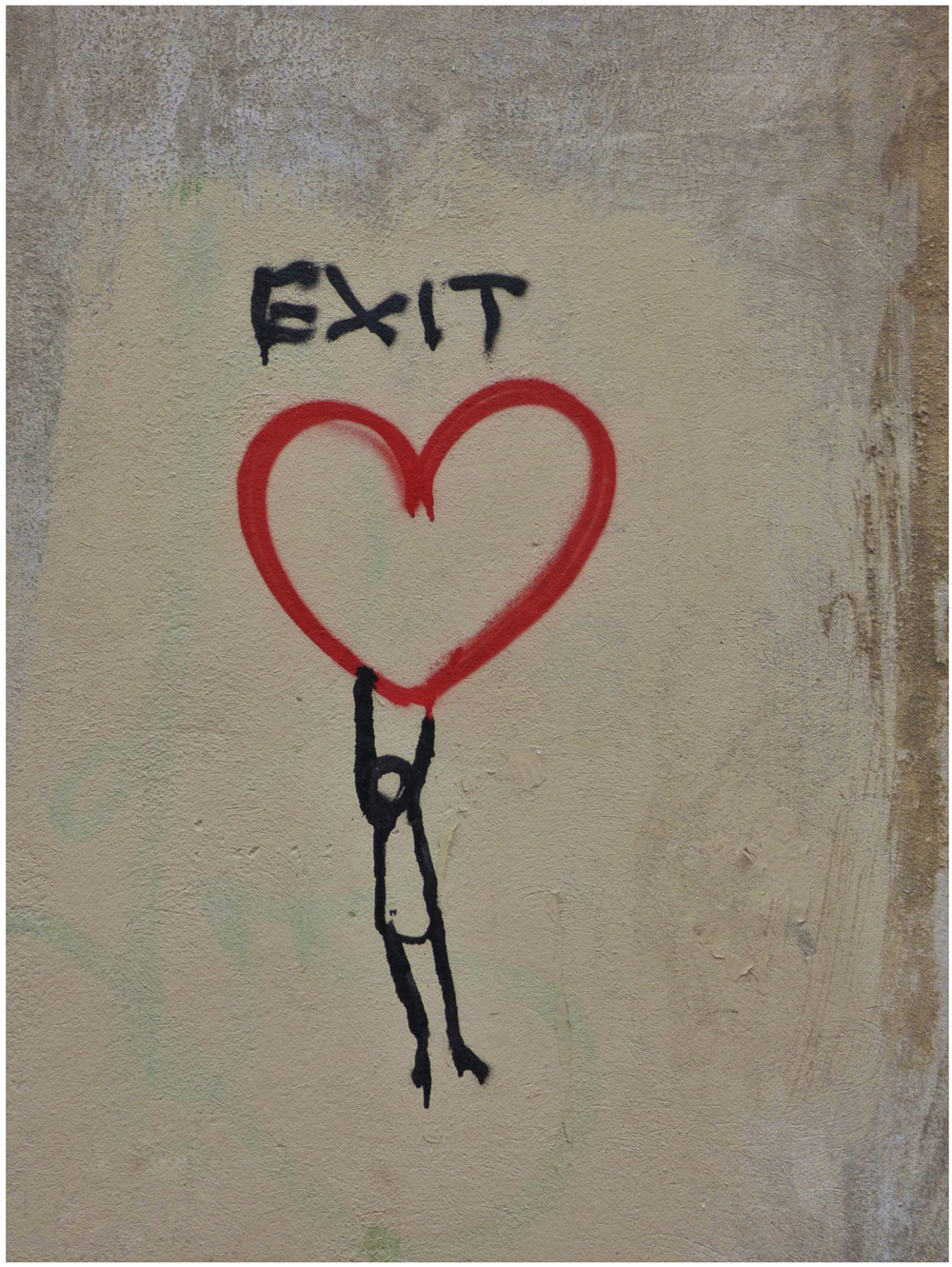
A deep dive into the neuroscience, the grief, and the framework that changes how you move through the end of love.
There is a particular kind of shame that comes with falling apart over a relationship. You are accomplished. You have built things, argued cases, managed crises. And yet here you are, unable to get out of bed, cycling through old text messages at 2am, making decisions you will spend years untangling.
The culture does not help. Breakups are framed as failure. You got it wrong again. Move on. Be stronger. And so most high-achieving women do what they do best: they push through, alone, and quietly fall to pieces.
Crina Ancuta, MD a certified coach trained directly under Katherine Woodward Thomas, has spent years working with women on exactly this. Her framework draws on neuroscience, attachment theory, and the conscious uncoupling method to offer something this conversation desperately needs: an explanation. Because when you understand what is happening in your brain, in your nervous system, and in your deep-seated patterns of relating, the shame has nowhere left to stand.
Here is what she shared.
Start here, because everything else makes more sense once you have this.
Researchers at UCLA, including Dr. Naomi Eisenberger and Dr. Matthew Lieberman, found that being rejected by someone you love activates the same neural alert as a primal physical threat. The brain does not distinguish between emotional expulsion and physical danger. Both register as: I may not survive this.
This is not poetic license. It is hardwiring. In earlier times, being expelled from your tribe meant certain death. Your brain catalogued that threat at the deepest level, and it has never forgotten. So when someone you love leaves, or when you are the one leaving and your nervous system is screaming at you to go back, that panic is your ancient survival instinct doing exactly what it was designed to do.
The physical symptoms are part of this. The racing heart. The inability to eat. The cramp in your stomach. The breathlessness. These are the body in panic, not the body being dramatic. And here is the part that matters for high-functioning professionals in particular: when the brain is in this state of fear, it loses its capacity to regulate emotion and make sound decisions.
Which means that the period when you are going through a separation, the period when you are negotiating financial settlements, custody arrangements, and major life restructuring, is precisely the period when your brain is least equipped to do it. This is why Crina is emphatic on one point: you cannot go through this alone. The brain heals through human connection. Isolation in a breakup is a biological problem, not a character flaw.
Here is something Crina raised that is genuinely difficult to sit with. Even in relationships that are clearly not working, even when we know on every rational level that leaving is the right thing, our brain treats that bond as a source of safety.
Better the devil you know, as the saying goes. Except it is not laziness or low standards driving that instinct. The nervous system, conditioned over years of attaching to this person, reads the relationship as regulating. As calm. Even when the relationship is actively harmful, there is a part of the brain that calculates: at least this is a known threat.
This explains a great deal. Why we go back. Why we find reasons to stay. Why leaving feels like free-falling even when staying feels like slow suffocation. The nervous system is doing its job. Understanding this does not mean you surrender to it. But it does mean you stop blaming yourself for having found it hard to walk away.
Katherine Woodward Thomas, whose book and method underpin Crina’s work, offers a framework for understanding the scale of what you have been through. She uses a car crash analogy, which is blunt and useful.
A fender bender is the early-stage relationship that fizzled. You invested some hope, but something in you always knew the fit was off. The impact is real but contained. A score of one to four on her trauma scale.
A single car collision is the relationship where you dove in with more hope than evidence. There were signs you chose to overlook. When it ended, it hurt, but some part of you had been bracing for it. A four to seven on the scale.
A head-on collision is the breakup you did not see coming, or the one whose consequences spread across every part of your life: financial security, your children’s stability, your social world, your sense of who you are. Long relationships. Deep bonds. Enormous impact.
A hit and run is the shattering kind. You invested everything. The relationship was your world. And then it ended without warning, or with a cruelty you are still trying to process. The ground did not shift. It disappeared.
The scale carries no judgment. Its purpose is to help you calibrate the support you need. A head-on collision requires a different level of care than a fender bender. Knowing where you land helps you stop expecting yourself to recover at a pace that does not match the actual impact.
The phrase has been through a lot. Set aside whatever associations you have with it and come back to the core idea.
Conscious uncoupling is a structured process for ending a relationship, or processing the end of one, in a way that does not leave you hollowed out and repeating the same mistakes a few years down the road. It is built on a specific premise: the value of a relationship is not determined by how long it lasted.
That is a significant reframe for a culture that measures relationship success purely in duration. Instead, the method asks: what wisdom did this relationship give me? What did I learn about love, about myself, about the patterns I carry? How did this experience, however painful, have the potential to make me a more honest, more self-aware, more genuinely loving person?
This is a practice, not a mindset shift you can achieve over a weekend. The method has five steps, and Crina’s work takes people through each one. But the orientation it asks you to adopt from the start is this: every relationship ends, and what you do with the ending is where the real work lives.
At some point in the conscious uncoupling process, you have to stop asking what they did and start asking what you have been doing. Crina is careful about how she frames this, because the point is never to blame yourself. The point is to locate the pattern.
Most of us carry a small collection of core beliefs about ourselves, formed in early childhood, that operate almost entirely below the level of conscious awareness. Beliefs along the lines of: I am not enough. I am unworthy of being truly loved. I do not belong. I am fundamentally alone. These beliefs do not announce themselves. They simply shape every relationship choice you make.
The exercise Crina uses is deceptively simple. Imagine your romantic history as a film. Watch it from the outside. What keeps showing up? Begin at the surface level: what do these people keep doing? Then go one layer deeper: what does my response to what they do reveal about what I believe about myself?
When you identify the belief, you can begin to challenge it. When you challenge it, you stop needing a particular kind of relationship to confirm it. And when that happens, the pattern quietly breaks.
Crina is clear that this work is best done with a therapist or trained relationship coach. The unconscious patterns that drive our choices are, by definition, hard to see from the inside. But awareness is where it begins. And awareness is something you can start building right now.
The loss of a close friendship can land with exactly the same force as the end of a romantic relationship. The same panic, the same grief, the same assault on your sense of safety and self.
The conscious uncoupling framework applies here too. And Crina’s guidance on how to approach a reconnection, should you be considering one, is worth holding onto: make sure any reach-out comes from a place of genuine desire, grounded in clarity about what you want and what you need from that relationship, rather than from the nervous system’s craving for a familiar source of safety.
She also raised something Katherine Woodward Thomas says that applies universally: love can be unconditional. Relationships cannot. You are allowed to have standards for how you are treated, even by people you love enormously.
If you are in the middle of something hard right now, Crina’s first recommendation is the simplest and the most non-negotiable: find support. A therapist. A coach. A community. Your nervous system heals through connection, and trying to think your way through a breakup in isolation is working against your own biology.
If you are further out and doing the deeper work, start with the film exercise. Watch your history. Look for what keeps showing up. Ask the harder question, not what did they do, but what do I believe about myself that made that feel familiar.
And if you want to go further, Katherine Woodward Thomas’s book Conscious Uncoupling is the primary text. Crina recommends it without reservation for anyone going through a separation, a divorce, or the kind of loss that has left you questioning everything.
The relationship ended. The learning does not have to.
___
Dr. Crina Ancuta is a certified conscious uncoupling practitioner trained by Katherine Woodward Thomas. She speaks and works with women on relationships, attachment, and personal transformation.
This blog is based on a WIL UAE member event held in March 2026.
Photo by Belinda Fewings on Unsplash
©2025-2026 Women in Law. All Rights Reserved.
Maintained by Onestop Website Solution